
Themed routes
MUHBA - Museu d'Història de Barcelona - Plaça del Rei
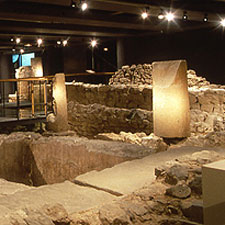
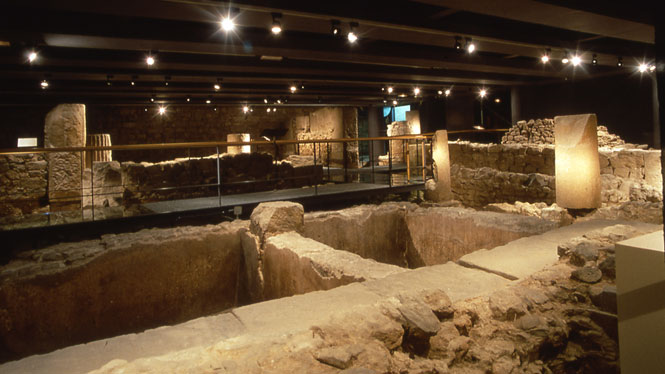
Beneath the Gothic Quarter’s landmark square in Barcelona lies an impressive archaeological site, the Conjunt Monumental de la Plaça del Rei, which offers visitors a glimpse of what the Roman colony of Barcino was like.
More pictures:
1-2-3
In addition to this large site, which covers an area of 4,000 m2 below the square, the monumental ensemble comprises the 11th-century Palau Comtal – the Count’s Palace – later to become the Palau Reial Major – the residence of the kings of Catalonia and Aragon –, highlights of which include the Saló del Tinell, or Great Hall, and the 14th-century Chapel of Santa Àgata. The Watchtower of King Martí was added in the 16th century. The Casa Padellàs, a Gothic Renaissance palazzo which was moved to the Plaça del Rei at the beginning of the 20th century, completes the architectural ensemble.
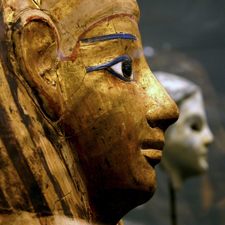
The museum collections mainly comprise objects taken from archaeological digs and feature such diverse materials and objects as ceramics, stone, epigraphs, glass, silver and gold, marble and stone sculptures, architectural elements, organic materials, coins, etc... spanning the Neolithic period to the present day. Highlights include Roman portraits, most of them from archaeological digs around the Roman walls; Roman and Hebrew inscriptions and ceramics (plates, bowls, oil bottles, jugs, water bowls, drinking vessels…). The museum also has a varied collection of objects from other sources.
Address: Pl. del Rei, s/n
Phone: 932 562 122
How to get there: Metro L4, stop Jaume I. | Bus 17, 19, 40 and 45. | Barcelona Bus Turístic, stop Barri Gòtic.
Web site: www.museuhistoria.bcn.cat
Phone: 932 562 122
How to get there: Metro L4, stop Jaume I. | Bus 17, 19, 40 and 45. | Barcelona Bus Turístic, stop Barri Gòtic.
Web site: www.museuhistoria.bcn.cat
Opening time: Tuesday to Saturday, from 10am to 7pm. Sunday from 10am to 8pm. Public holidays, from 10am to 2pm.
January 1st, May 1st, June 24th, December 25th closed.
Roman Route
- Columns of the Temple of Augustus
- MUHBA - Museu d'Història de Barcelona - Plaça del Rei
- Roman wall and aqueducts (Casa de l'Ardiaca)
- Wall and gate of the Roman city of Barcino - Friezes around the front of the Col·legi d'Arquitectes (Plaça Nova)
- Wall and defence towers of the Roman city of Barcino (Plaça Ramon Berenguer)
- Museu d'Arqueologia de Catalunya
- Roman necropolis (Plaça Villa de Madrid)


Barcelona Restaurants
The Catalan capital is also a culinary capital: prestigious chefs serve up our traditional cuisine and the flavours from around the world. Can you decide on one?