Interesting districts
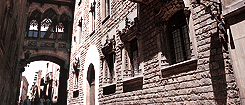
The centre of the Roman city, today’s Gothic Quarter, was marked by the point where the two main streets, the Cardo and Decumanus, converged. Today the Carrer del Bisbe and Carrer Llibreteria stand on this site. Nearby, we can still see the remains of the Roman temple of Augustus. In fact, the original centre of Roman and medieval Barcelona still forms the core of 21st-century Barcelona. Its maze of narrow streets and squares is steeped in the city’s past and present.
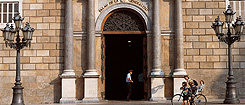
Here, in the Gothic Quarter, we find the City Hall and the seat of the Catalan Government, the Palau de la Generalitat, the Cathedral and other Gothic churches, including Santa Maria del Pi and Sants Just i Pastor. Very near the Plaça de Sant Jaume, right in the middle of this Barcelona neighbourhood, is the old Jewish Quarter, the Call Jueu, with its endless narrow streets, where some remains of the ancient synagogue still survive.
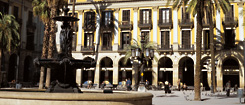
In the Gothic Quarter, the Plaça del Rei proudly showcases the architectural ensemble made up of the royal residences of the Catalan-Aragonese monarchs. Below the square, you can visit the impressive archaeological remains of Roman Barcino. Behind the Cathedral stands the beautiful Plaça de Sant Felip Neri, with its baroque church. The square is surrounded by narrow streets in a Barcelona neighbourhood suffused with history which comes to life when you go there.
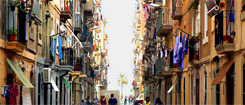
The Barceloneta is a triangular spit of land that cuts into the sea boats in the old harbour, or Barcelona’s Port Vell, on one side, and sandy beaches on the other. The neighbourhood, with its narrow, rectilinear streets, was built on a military grid structure to provide accommodation for the former inhabitants of La Ribera who had lost their homes due to the construction of the citadel. The houses were low-rise and small in scale so as not to obstruct views of the city.
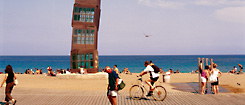
The Barceloneta was once the home of fishermen, people associated with the fishing trade and the metal industry, and is now one of the city’s most visited and popular districts. In 1988, in pre-Olympic days, the decision was taken to demolish the old beachfront restaurants, known as xiringuitos, and public baths, heralding a process of opening the city up to the sea and the modernisation of an area which now offers first-class beaches as the main attraction for its visitors.
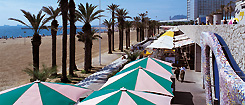
On the sand and inside the neighbourhood, rows of restaurants and bars combine with the traditional images of locals sitting in their chairs in the street and narrow balconies displaying clothes drying in the sun.
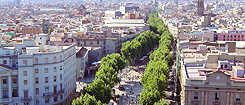
La Rambla is exactly 1.2 kilometres long and nearly everyone who visits Barcelona walks along it. La Rambla was laid out in 1766, following the contours of the medieval city walls that had bounded this part of Barcelona since the 13th century. The locals took it to their hearts straightaway. In Barcelona, a city of narrow, winding streets, the Rambla was the only space where everyone could stroll and spend their leisure time. And we mean everyone. Because of its central location, the Rambla became a meeting place for all the social classes. .
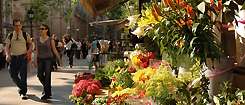
Gradually, leisure and cultural attractions found the perfect location on La Rambla. The convents disappeared and florists and newsstands set up there premises here. As you walk along, you’ll see landmark buildings, such as the greatest theatre of Barcelona’s opera, the Gran Teatre del Liceu, the Palau de la Virreina and the spectacular Boqueria Market. This human river, with its street artists, tourists and locals, who still come here for a stroll, take us on a journey through this microcosm of contemporary Barcelona.
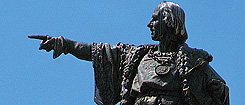
Where Where La Rambla meets the sea, we find the Mirador de Colom, a unique opportunity to admire this unique, green artery of pedestrians from the air.
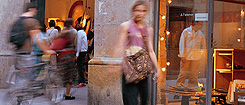
Many artists have set up their studios in La Ribera neighbourhood, inheriting the past of the neighbourhood where Barcelona city’s artisans used to live. Many street names remind us of the ancient trades and skills: Mirallers (mirror makers), Sombrerers (hatters), Argenters (silversmiths), etc. Streets that grew up around the church of Santa Maria del Mar, which is, without a shadow of a doubt, the masterpiece of Catalan Gothic architecture.
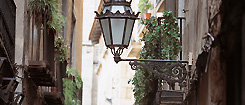
By the 13th century, Barcelona needed to expand beyond its city walls and a separate borough was created, which soon became the district where merchants and the wealthiest Barcelona families came to live, supported by an important seafaring tradition. Carrer Montcada, currently the home of art galleries and major museums such as the Museu Picasso, formed the centre of this affluent part of Barcelona. The medieval palazzos are a vivid reminder of this past. A period of splendour cut short in the 16th century, and later, by the War of the Spanish Succession, when Philip V built a military citadel on the eastern side of La Ribera.
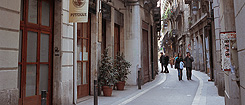
Now, among the ancient stones of La Ribera, restaurants, wine bars, cocktail lounges, dance clubs and designer boutiques showcase the vibrant colour of an old neighbourhood whose beauty has been renewed.
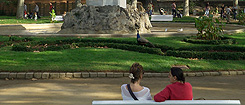
The Parc de la Ciutadella, Barcelona’s urban “green lung”, is no ordinary park. In 1869, the demolition of the military citadel, built a century earlier by Philip V, was highly significant for a boom Barcelona with its sights firmly set on the 1888 Universal Exhibition. The result was a park which the architect Josep Fontseré adapted to the needs of the world fair.
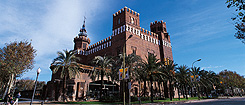
Relics of the exhibition can still be seen today in the Parc de la Ciutadella, with buildings such as the Castell dels Tres Dragons, which occupies the original restaurant designed for the exhibition by Domènech i Montaner, the waterfall and lake, designed by Fontseré, and the beautiful plant house, the Umbracle, and glass house, the Hivernacle. Barcelona Zoo has stood on the other side of the park since 1892. The Catalan Parliament stands in the parade ground, in the former military arsenal of the citadel. Nearby, you can see a replica of Josep Llimona’s beautiful sculpture "El desconsol" (Distress), which is one of the most important pieces of public art in the park.
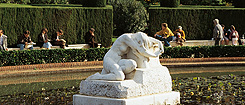
A giant mammoth and a bandstand are among the other elements which surprise visitors to this vibrant central park in Barcelona, which covers an area of 18 hectares.

Port Vell commences at the end of Barcelona’s La Rambla, by the Columbus monument, a major city landmark since 1886. At the top of the column, 50 metres above city, a viewing gallery boasts breathtaking views of the sea and the famous boulevard. On one side, the 14th-century medieval shipyards, the Drassanes Reials, provide the opportunity to visit Barcelona’s Museu Marítim, and if you head for the waterfront, in the Portal de la Pau, you’ll be able to see the historic schooner, the Pailebot Santa Eulàlia, which was built in 1918 and named after Barcelona’s co-patron saint. This is the departure point for the traditional pleasure boats, the "Golondrinas", which operate harbour rides around the Port Vell.
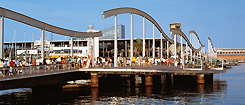
Here, the wooden walkway, known as the Rambla de Mar, leads to the retail and leisure complex Maremagnum, Barcelona’s L’Aquàrium. Art works also add a splash of colour to the Moll de la Fusta in the shape of a polychrome sculpture by the American pop artist Roy Lichtenstein, and, still in Port Vell but bordering Barceloneta, the building of the old harbour warehouse, Magatzems Generals de Comerç, reminds us of the area’s mercantile past. Under the name Palau de Mar, the red-brick building now houses one of Barcelona’s most interesting museums, the Museu d’Història de Catalunya.
The centre of the Roman city, today’s Gothic Quarter, was marked by the point where the two main streets, the Cardo and Decumanus, converged. Today the Carrer del Bisbe and Carrer Llibreteria stand on this site. Nearby, we can still see the remains of the Roman temple of Augustus. In fact, the original centre of Roman and medieval Barcelona still forms the core of 21st-century Barcelona. Its maze of narrow streets and squares is steeped in the city’s past and present.
Here, in the Gothic Quarter, we find the City Hall and the seat of the Catalan Government, the Palau de la Generalitat, the Cathedral and other Gothic churches, including Santa Maria del Pi and Sants Just i Pastor. Very near the Plaça de Sant Jaume, right in the middle of this Barcelona neighbourhood, is the old Jewish Quarter, the Call Jueu, with its endless narrow streets, where some remains of the ancient synagogue still survive.
In the Gothic Quarter, the Plaça del Rei proudly showcases the architectural ensemble made up of the royal residences of the Catalan-Aragonese monarchs. Below the square, you can visit the impressive archaeological remains of Roman Barcino. Behind the Cathedral stands the beautiful Plaça de Sant Felip Neri, with its baroque church. The square is surrounded by narrow streets in a Barcelona neighbourhood suffused with history which comes to life when you go there.
The Barceloneta is a triangular spit of land that cuts into the sea boats in the old harbour, or Barcelona’s Port Vell, on one side, and sandy beaches on the other. The neighbourhood, with its narrow, rectilinear streets, was built on a military grid structure to provide accommodation for the former inhabitants of La Ribera who had lost their homes due to the construction of the citadel. The houses were low-rise and small in scale so as not to obstruct views of the city.
The Barceloneta was once the home of fishermen, people associated with the fishing trade and the metal industry, and is now one of the city’s most visited and popular districts. In 1988, in pre-Olympic days, the decision was taken to demolish the old beachfront restaurants, known as xiringuitos, and public baths, heralding a process of opening the city up to the sea and the modernisation of an area which now offers first-class beaches as the main attraction for its visitors.
On the sand and inside the neighbourhood, rows of restaurants and bars combine with the traditional images of locals sitting in their chairs in the street and narrow balconies displaying clothes drying in the sun.
Many artists have set up their studios in La Ribera neighbourhood, inheriting the past of the neighbourhood where Barcelona city’s artisans used to live. Many street names remind us of the ancient trades and skills: Mirallers (mirror makers), Sombrerers (hatters), Argenters (silversmiths), etc. Streets that grew up around the church of Santa Maria del Mar, which is, without a shadow of a doubt, the masterpiece of Catalan Gothic architecture.
By the 13th century, Barcelona needed to expand beyond its city walls and a separate borough was created, which soon became the district where merchants and the wealthiest Barcelona families came to live, supported by an important seafaring tradition. Carrer Montcada, currently the home of art galleries and major museums such as the Museu Picasso, formed the centre of this affluent part of Barcelona. The medieval palazzos are a vivid reminder of this past. A period of splendour cut short in the 16th century, and later, by the War of the Spanish Succession, when Philip V built a military citadel on the eastern side of La Ribera.
Now, among the ancient stones of La Ribera, restaurants, wine bars, cocktail lounges, dance clubs and designer boutiques showcase the vibrant colour of an old neighbourhood whose beauty has been renewed.
Port Vell commences at the end of Barcelona’s La Rambla, by the Columbus monument, a major city landmark since 1886. At the top of the column, 50 metres above city, a viewing gallery boasts breathtaking views of the sea and the famous boulevard. On one side, the 14th-century medieval shipyards, the Drassanes Reials, provide the opportunity to visit Barcelona’s Museu Marítim, and if you head for the waterfront, in the Portal de la Pau, you’ll be able to see the historic schooner, the Pailebot Santa Eulàlia, which was built in 1918 and named after Barcelona’s co-patron saint. This is the departure point for the traditional pleasure boats, the "Golondrinas", which operate harbour rides around the Port Vell.
Here, the wooden walkway, known as the Rambla de Mar, leads to the retail and leisure complex Maremagnum, Barcelona’s L’Aquàrium. Art works also add a splash of colour to the Moll de la Fusta in the shape of a polychrome sculpture by the American pop artist Roy Lichtenstein, and, still in Port Vell but bordering Barceloneta, the building of the old harbour warehouse, Magatzems Generals de Comerç, reminds us of the area’s mercantile past. Under the name Palau de Mar, the red-brick building now houses one of Barcelona’s most interesting museums, the Museu d’Història de Catalunya.